
After Orthopaedic Surgery: Why Passing Tests Matters More Than Passing Time
A calendar tells us how long it has been since surgery. It does not tell us whether strength, power and movement have actually recovered.
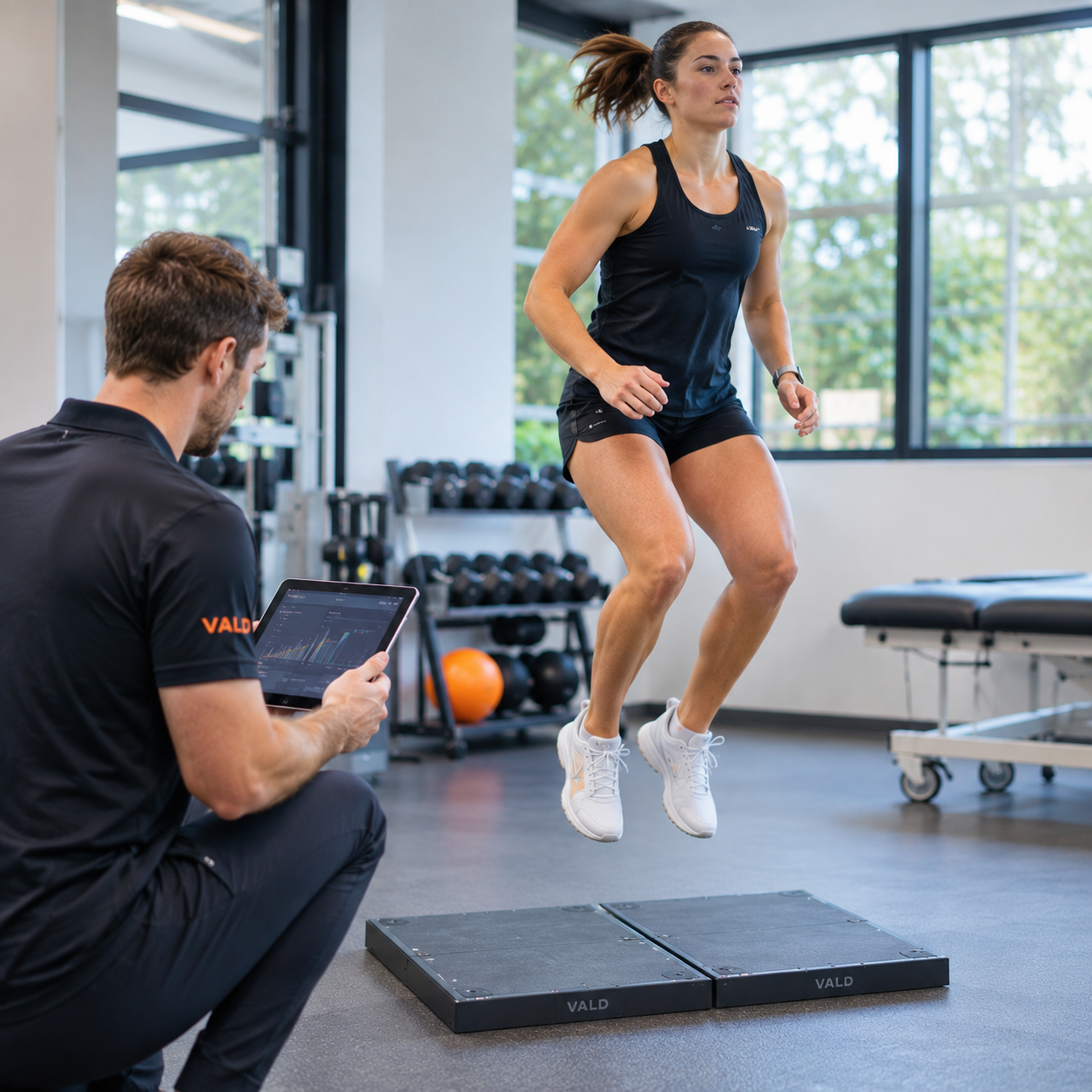
What force plates can reveal after ACL reconstruction
Research after anterior cruciate ligament reconstruction provides a clear example. In 2023, Kotsifaki and colleagues tested 126 athletes who were at the stage of returning to sport and compared them with 532 healthy participants. Using dual force plates, the researchers found that vertical jump testing was more sensitive than traditional horizontal hop-distance tests for revealing performance asymmetries. This is important because an athlete can sometimes achieve a similar hop distance on both legs while using a different strategy to produce or absorb force. In other words, the result can look symmetrical while the underlying mechanics are not.
Rehabilitation should be criteria based
This does not apply only to ACL surgery. After joint replacement, tendon repair, fracture fixation or other orthopaedic procedures, time is only one piece of the decision. Physiotherapy follows the surgeon's biological precautions while progressively restoring movement, strength, endurance, confidence and the tasks required for work or sport. Early goals may include swelling control and range of motion. Later goals may include heavy strength, running, jumping, change of direction or repeated work tasks. The progression should be linked to what the patient can demonstrate, not simply to reaching a date on the calendar.
Why equipment and repeated testing can add value
Force plates measure how force is produced and absorbed during tasks such as a countermovement jump or landing. They can quantify variables such as impulse, peak force, rate of force development and side-to-side strategy. Strength testing, hop tests, movement quality, symptoms and psychological readiness provide other pieces of the picture. No single test should be treated as a green light for sport. The value comes from combining measures and repeating them at meaningful milestones. A review may show that range has returned but quadriceps strength is lagging, or that strength is good but landing force remains asymmetric. That information changes the rehabilitation plan. Objective testing makes progress visible, identifies deficits that the eye may miss and helps patients understand why the next phase of rehabilitation is necessary.
Selected research
1. Kotsifaki R, Sideris V, King E, Bahr R, Whiteley R. Performance and symmetry measures during vertical jump testing at return to sport after ACL reconstruction. British Journal of Sports Medicine. 2023;57(20):1304-1310. doi:10.1136/bjsports-2022-106588.
2. Turk R, Shah S, Chilton M, et al. Return to Sport After ACL Reconstruction Requires Evaluation of More Than Two Functional Tests, Psychological Readiness, Quadriceps/Hamstring Strength, and Time After Surgery of 8 Months. Arthroscopy. 2023;39(3):790-801.e6.
Not sure if Physiotherapy is the best option or want some quick advice?
Email our team and a Physiotherapist will contact you within 1 working day
