Bone Density Scans: What Every Woman Should Know About Her Bone Health
When was the last time you thought about the health of your bones? Most women understand the importance of maintaining strong muscles, staying active and eating well. But bone health often receives far less attention - until someone experiences a fracture or is diagnosed with osteoporosis.
The reality is that bone loss can occur silently for many years, without pain or obvious symptoms. Many women aren’t screened until it’s much harder to change bone density, which is why we are attempting to move the needle.
Understanding your bone density, personal risk factors and when to seek assessment can help you take a proactive approach to maintaining skeletal health.
What happens to our bones as we age?
Bone is living tissue that constantly undergoes a process of breakdown and rebuilding.
We generally achieve our peak bone mass by our late 20s to early 30s. From this point onwards, maintaining bone strength becomes increasingly important.
During menopause, declining oestrogen accelerates bone turnover and can lead to a more rapid reduction in bone mineral density, particularly in the years surrounding the final menstrual period.
This is one reason women experience a substantially greater risk of osteoporosis and fragility fractures after menopause (RACGP & Healthy Bones Australia, 2024).
But menopause isn't the only factor.
Genetics, nutrition, physical activity, certain medications, medical conditions and previous fractures can all influence bone health.
What is a DEXA scan?
A dual-energy X-ray absorptiometry (DEXA or DXA) scan is a quick, non-invasive test that measures bone mineral density.
It usually assesses two important areas:
The lumbar spine
The hip, including the femoral neck
The left forearm (usually)
These are common sites for osteoporosis-related fractures.
The scan uses a very low dose of radiation, requires no injections and is generally completed within 10–20 minutes.
What do my results actually mean?
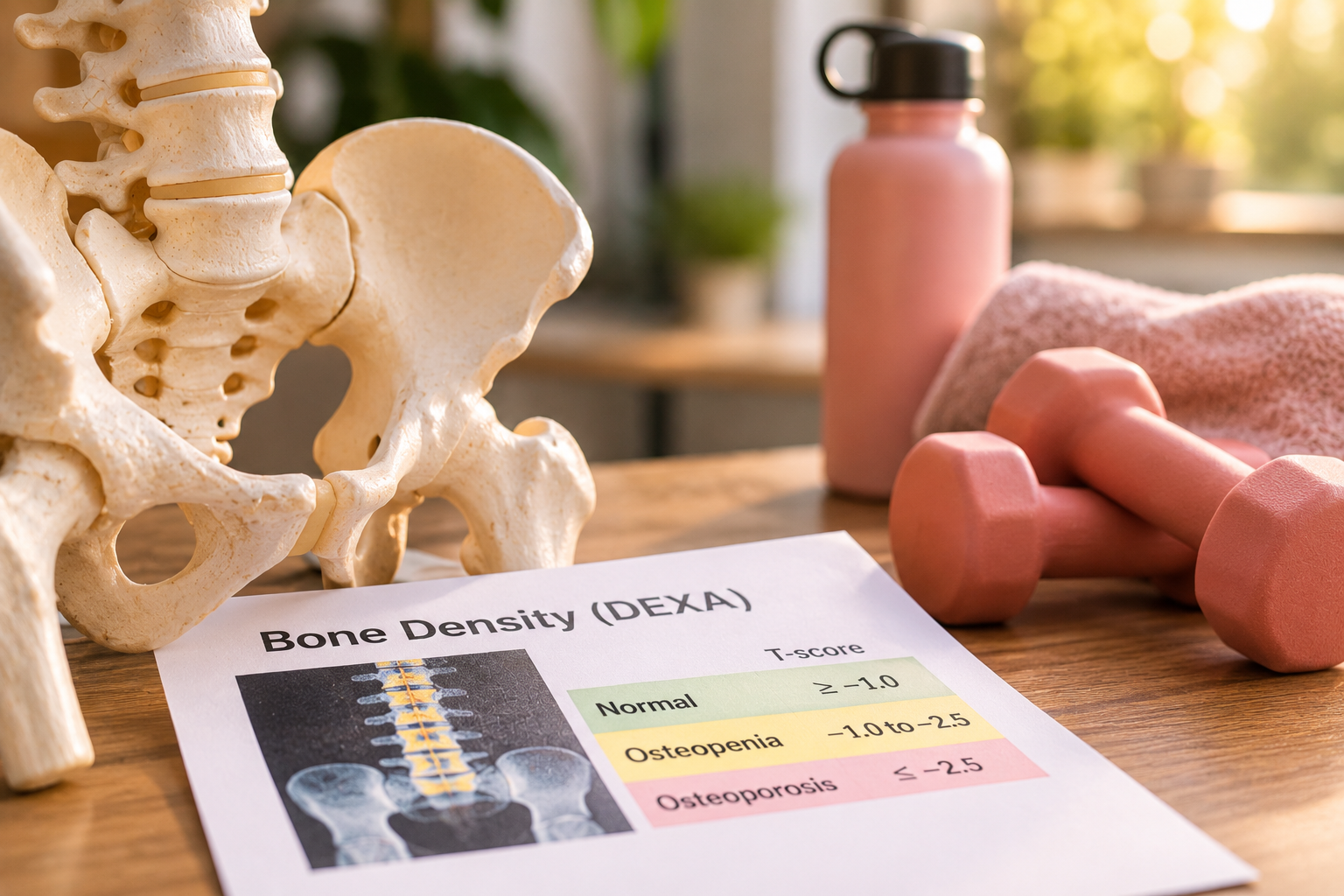
DEXA reports often include a T-score, which compares your bone mineral density with that of a healthy young adult reference population.
For postmenopausal women, the commonly used classifications are:
T-score Classification
−1.0 or above Normal bone density
Between −1.0 and −2.5 Low bone mass (osteopenia)
−2.5 or below Osteoporosis
Importantly, a T-score doesn't tell the whole story.
Someone with osteopenia may still have a significant fracture risk depending on their age, previous fractures and other risk factors.
For premenopausal women, Z-scores are generally more appropriate, and osteoporosis should not be diagnosed using bone density alone.
Who should consider a bone density assessment?
Not every woman requires a DEXA scan at 40 or 50.
However, assessment may be appropriate when certain risk factors are present, including:
A previous fracture following minimal trauma
Early menopause or prolonged oestrogen deficiency
A strong family history of osteoporosis or hip fracture
Long-term oral corticosteroid use
Certain medical conditions affecting bone metabolism
Significant loss of height or concerns about vertebral fractures
Australian guidelines generally recommend assessing fracture risk in adults aged 50 and over, with DEXA testing guided by age, risk factors and clinical findings.
Women experiencing premature or early menopause may require earlier consideration of bone health.
Your GP can help determine whether a scan is appropriate and whether Medicare eligibility criteria are met.
Can I actually improve my bone health?
Absolutely.
Although we cannot change our genetics or age, bone responds to the mechanical demands placed upon it.
Progressive resistance training and appropriate weight-bearing impact exercise are particularly important for maintaining bone strength.
Research from the Australian LIFTMOR trial demonstrated that supervised high-intensity resistance and impact training improved lumbar spine bone mineral density and physical function in postmenopausal women with low bone mass (Watson et al., 2018).
Nutrition also matters, particularly adequate calcium, vitamin D and protein.
However, women with osteoporosis or previous fragility fractures may require additional medical treatment to reduce fracture risk.
Exercise is important, but it doesn't replace osteoporosis medication when medication is indicated.
How can physiotherapy help?
Physiotherapists can help women understand how to exercise safely and effectively for their bone health.
This may include progressive strength training, appropriate impact exercise, balance training, falls prevention and modifications for existing injuries or fractures.
For women with osteoporosis, exercise should be individualised rather than avoided.
The goal isn't simply to prevent bone loss—it's to maintain the strength, confidence and physical capacity to keep doing the things you love.
And the earlier we start paying attention to bone health, the better prepared we can be for the decades ahead.
References:
Compston, J. E., McClung, M. R., & Leslie, W. D. (2019). Osteoporosis. The Lancet, 393(10169), 364–376.
Royal Australian College of General Practitioners & Healthy Bones Australia. (2024). Osteoporosis management and fracture prevention in postmenopausal women and men over 50 years of age (3rd ed.).
Watson, S. L., Weeks, B. K., Weis, L. J., et al. (2018). High-intensity resistance and impact training improves bone mineral density and physical function in postmenopausal women with osteopenia and osteoporosis: The LIFTMOR randomized controlled trial. Journal of Bone and Mineral Research, 33(2), 211–220.
World Health Organization. (2020). WHO guidelines on physical activity and sedentary behaviour.
Not sure if Physiotherapy is the best option or want some quick advice?
Email our team and a Physiotherapist will contact you within 1 working day
