
Children's Sports Injuries: The Hidden Cost of Early Specialisation
More training is not always better for a growing athlete, particularly when one sport begins to dominate the entire year. What youth-sport research is showing
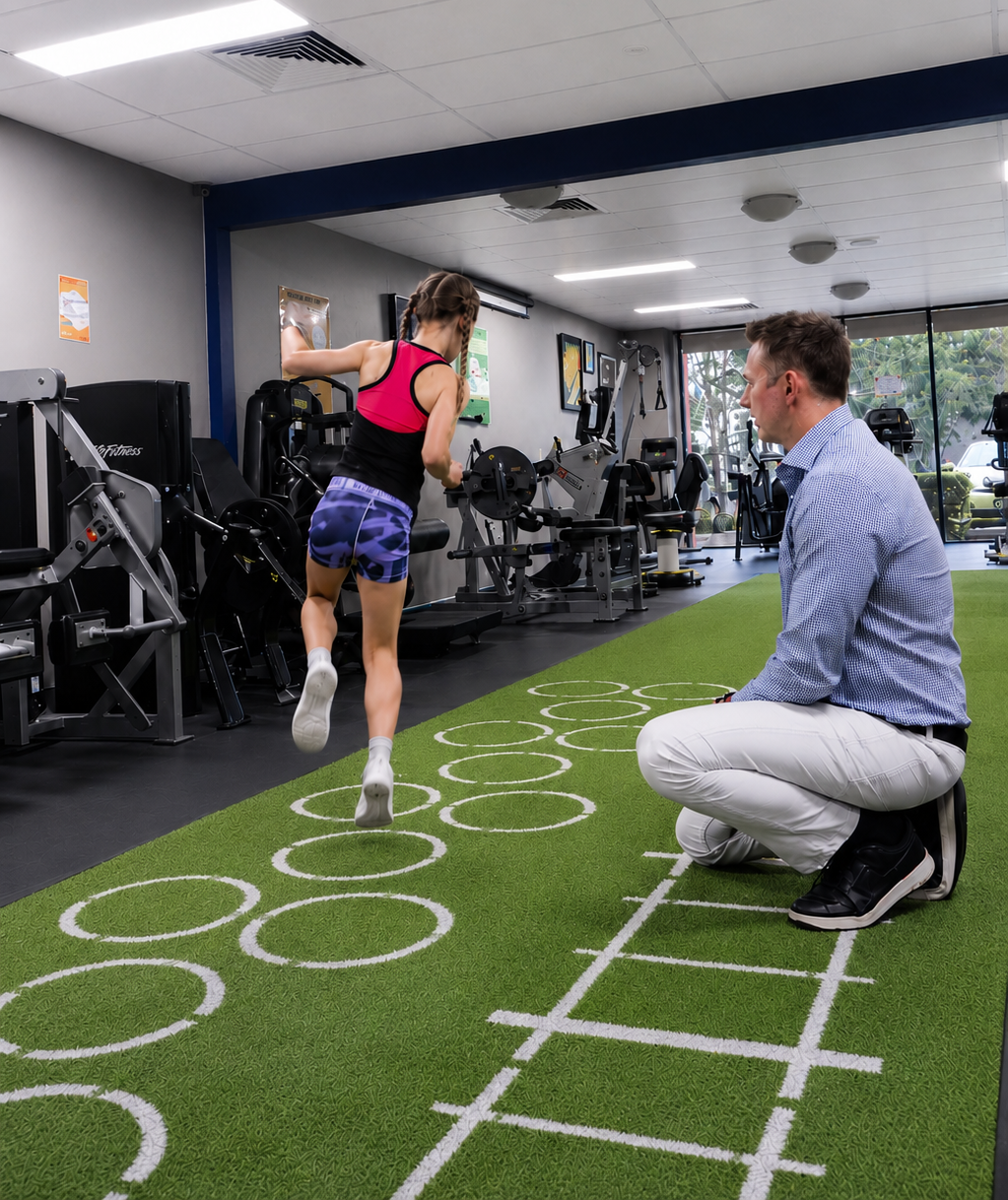
A New Zealand study of 414 football players aged 10 to 15 provides a useful snapshot of modern youth sport. Researchers classified 43 percent of participants as highly specialised, meaning their sporting participation was heavily concentrated in one sport. Highly specialised players were more likely to report a history of gradual-onset injury, and the odds of these injuries also rose with greater weekly and annual sports participation. Earlier prospective research in high-school athletes has also linked higher levels of sports specialisation with increased lower-limb injury rates. These studies do not prove that specialising in one sport will inevitably cause an injury, but they do raise an important question about how much repeated loading a growing body is being asked to absorb.
Children are not small adults
Growth changes the way injuries present. Bones lengthen, muscle-tendon units adapt, coordination can temporarily change and vulnerable growth areas can become painful under repeated traction or impact. Heel pain, knee pain, shin symptoms and throwing-related problems may therefore need a different approach from the same complaint in an adult. Physiotherapy assessment considers the injury itself but also recent growth, weekly training volume, competition schedule, school sport, strength, movement control, previous injuries and how much genuine recovery time the child has.
Why monitoring matters during growth
The aim is rarely to remove all sport. More often, we modify load while maintaining safe activity, then rebuild strength and sport-specific capacity. Objective testing can help older children and adolescents when it is interpreted in the context of age and maturation. Strength testing, hop tests and, where appropriate, force-plate testing can show changes in jump strategy, side-to-side force or landing ability. These numbers should not be treated like adult pass-fail scores because children are still developing. Regular review is particularly valuable during growth spurts, rapid increases in training or a return from injury, because the demands can change faster than the rehabilitation plan. For many young athletes, variety, recovery and gradual progression are performance strategies as much as injury-prevention strategies.
Selected research
1. Zoellner A, Whatman C, Sheerin K, Read P. Prevalence of sport specialisation and association with injury history in youth football. Physical Therapy in Sport. 2022;58:160-166. doi:10.1016/j.ptsp.2022.10.013.
2. McGuine TA, Post EG, Hetzel SJ, Brooks MA, Trigsted S, Bell DR. A Prospective Study on the Effect of Sport Specialization on Lower Extremity Injury Rates in High School Athletes. American Journal of Sports Medicine. 2017.
Not sure if Physiotherapy is the best option or want some quick advice?
Email our team and a Physiotherapist will contact you within 1 working day
