
Knee Osteoarthritis: Why Exercise Is Treatment, Not Just Fitness
Knee osteoarthritis is often described as "wear and tear", yet research shows that improving strength and function can change how the knee feels and performs.
A head-to-head treatment trial
One of the more interesting knee osteoarthritis studies was published in the New England Journal of Medicine in2020. Researchers randomly allocated 156 people with knee osteoarthritis to either a course of physical therapy or a glucocorticoid injection. At one year, the physical-therapy group had better overall pain and function scores than the injection group. This does not mean injections are never useful, nor that every patient will respond in the same way. It does, however, reinforce an important message: rehabilitation is not simply an optional add-on while we wait for the joint to deteriorate. Exercise can be a central treatment for symptoms and function.
What a physiotherapist is trying to change
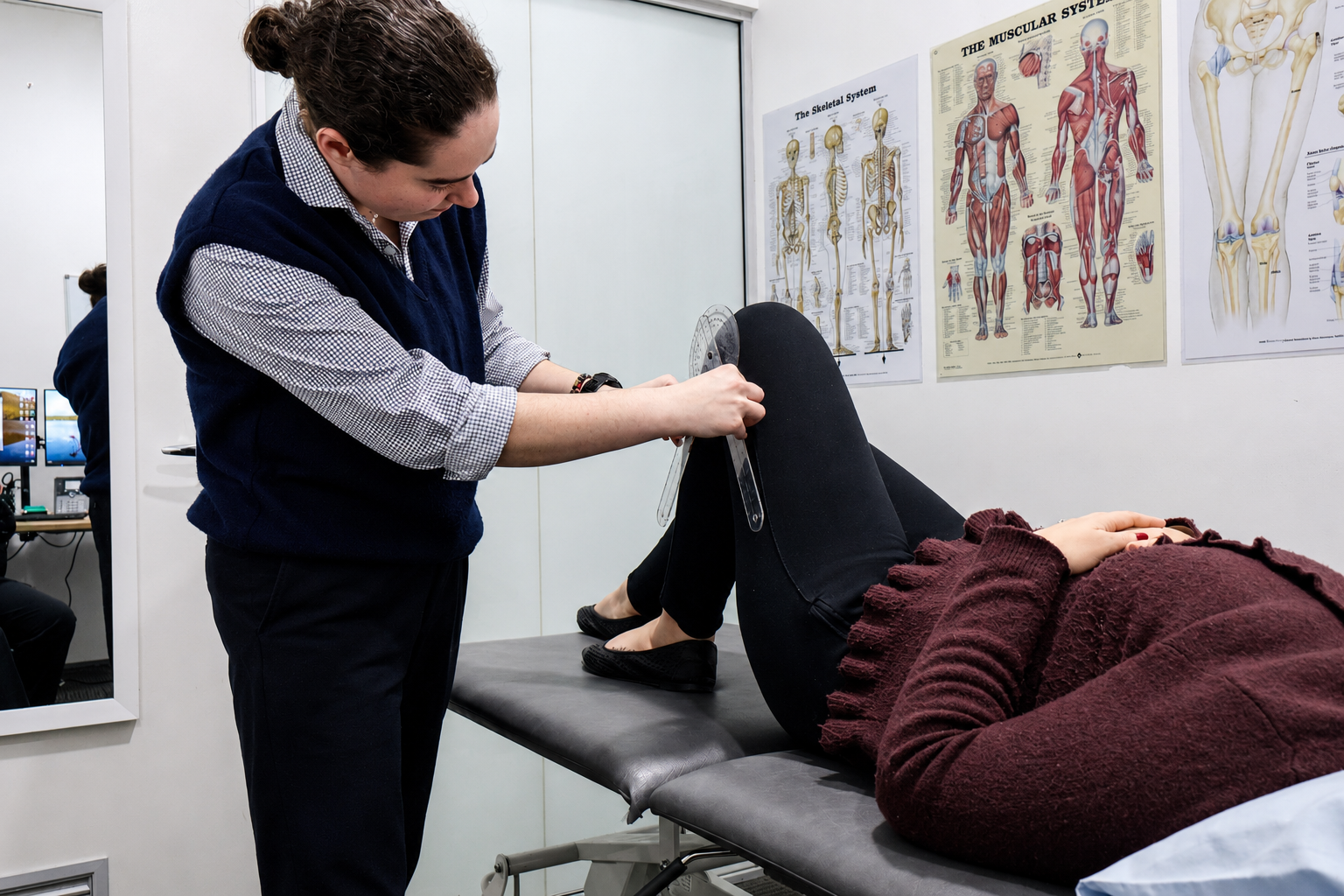
Knee osteoarthritis is not managed by strengthening the quadriceps in isolation. We consider knee movement, leg strength, hip and calf capacity, walking tolerance, stairs, balance, confidence, sporting or work goals and the amount of activity the knee is currently tolerating. The exercise dose is then matched to the person. For one patient that may begin with sit-to-stand and short walks; for another it may include heavy leg strengthening, cycling, hills or gym work. Manual therapy may sometimes be used to make movement more comfortable, but the longer-term aim is usually to improve the knee and the person around it, not simply to provide temporary relief.
Testing gives us more than a pain score
Objective measures are particularly useful in osteoarthritis because pain naturally fluctuates. Timed sit-to-stand, step tests, walking speed, range of motion and strength testing can show improvement even during a temporary pain flare. Where appropriate, more detailed tools such as dynamometry or force-based testing can quantify side-to-side differences and help set meaningful targets. Regular review matters because exercise must be progressed to remain an adequate training stimulus. It also allows us to identify when swelling, loss of movement, night pain or a sudden change in symptoms needs medical review. The most useful question is often not "How worn is my knee?" but "What can we improve so this knee does more with less difficulty?"
Selected research
1. Deyle GD, Allen CS, Allison SC, et al. Physical Therapy versus Glucocorticoid Injection for Osteoarthritis of the Knee. New England Journal of Medicine. 2020;382:1420-1429. doi:10.1056/NEJMoa1905877.
Not sure if Physiotherapy is the best option or want some quick advice?
Email our team and a Physiotherapist will contact you within 1 working day
