
Pelvic Floor Strength After 40: Why It's Never Too Late to Start
When women think about pelvic floor exercises, they often associate them with pregnancy, childbirth or the early postnatal period. But pelvic floor health doesn't stop being important once you've finished having children.
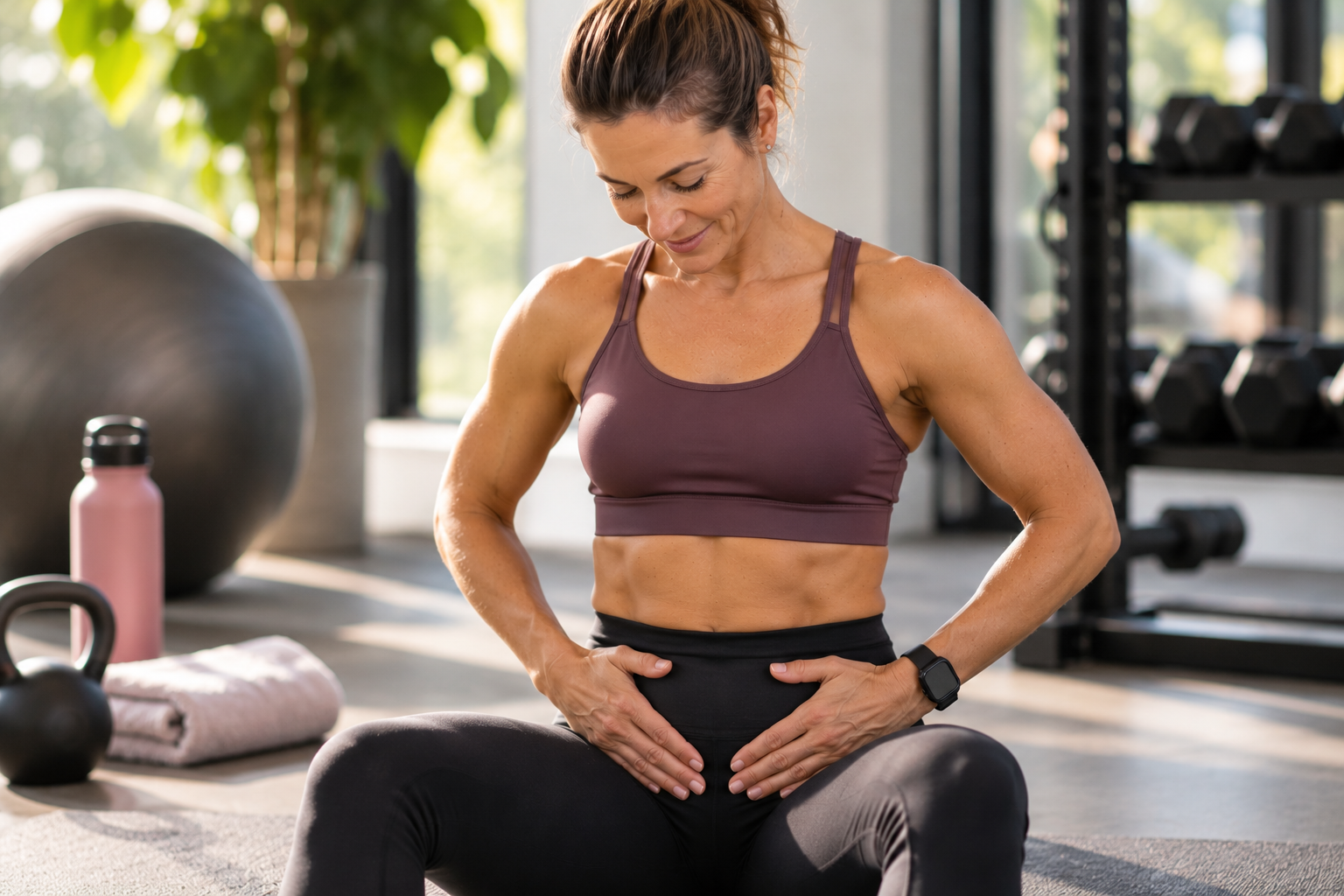
In fact, your pelvic floor continues to play an essential role in bladder control, bowel function, sexual health and pelvic organ support throughout your entire life.
And for women approaching perimenopause, menopause and beyond, understanding how to look after these muscles becomes increasingly important.
What exactly is the pelvic floor?
The pelvic floor is a group of muscles and connective tissues located at the base of the pelvis.
These muscles help support the bladder, uterus and bowel, while also contributing to continence, sexual function and the ability to manage changes in abdominal pressure.
Like other muscles in the body, the pelvic floor needs adequate strength, endurance, coordination and the ability to relax.
Importantly, a healthy pelvic floor isn't simply one that can squeeze strongly.
It must also know when to contract, when to relax and how to respond to everyday activities.
Why can symptoms appear in midlife?
Some women experience pelvic floor symptoms following childbirth. Others develop symptoms years or even decades later.
Common concerns include:
- Leaking urine when coughing, sneezing, running or jumping
- Sudden or frequent urges to urinate
- Difficulty controlling wind or bowel movements
- A feeling o f heaviness or pressure in the vagina
- Pelvic organ prolapse symptoms
- Discomfort during sexual intercourse
Several factors may contribute, including pregnancy and childbirth history, ageing, changes in connective tissues, constipation, chronic coughing and increased demands on the pelvic floor.
During menopause, declining oestrogen can also affect the tissues of the vagina, vulva and urinary tract.
However, hormonal changes don't automatically mean your pelvic floor muscles have become weak.
The cause of pelvic floor symptoms is often more complex than muscle strength alone.
Is bladder leakage just a normal part of ageing?
No.
Although urinary incontinence becomes more common with age, it should not simply be accepted as something women must live with.
Leaking during exercise, coughing or sneezing is common, but it is not inevitable.
The good news?
We have strong evidence supporting pelvic floor muscle training as an effective first-line treatment for many women experiencing urinary incontinence.
A major Cochrane review found that women undertaking pelvic floor muscle training were significantly more likely to report improvement or cure of stress urinary incontinence compared with women receiving no treatment or inactive control interventions (Dumoulin et al., 2018).
Should every woman be doing Kegels?
Not necessarily.
Pelvic floor exercises can be extremely beneficial, but they need to be appropriate for the individual.
Some women have difficulty generating an effective contraction.
Others may have pelvic floor muscles that are overactive, poorly coordinated or unable to relax adequately.
In these circumstances, simply doing more squeezing exercises may not address the underlying problem.
The goal is a pelvic floor that functions well, not one that is constantly switched on.
An assessment with a pelvic health physiotherapist can help determine whether strengthening, relaxation, coordination or a combination of strategies is most appropriate.
What about pelvic organ prolapse?
Pelvic organ prolapse occurs when one or more pelvic organs descend towards or into the vagina.
Symptoms can include vaginal heaviness, pressure, dragging or the sensation of a bulge.
Pelvic floor muscle training can improve symptoms for some women with prolapse, particularly when exercises are individualised and supervised.
Evidence-based guidelines recommend supervised pelvic floor muscle training as an important conservative management option for appropriate presentations (NICE, 2019).
Not every woman with prolapse requires surgery, and many can continue exercising with appropriate support.
Can I still lift weights and exercise?
Absolutely.
Having pelvic floor symptoms doesn't automatically mean you need to stop running, jumping or lifting weights.
In fact, resistance training is important for maintaining muscle strength, bone health and physical function as women age.
The key is understanding your current capacity and progressing exercise appropriately.
For some women, this may involve temporarily modifying load, adjusting exercise technique or building pelvic floor strength and coordination alongside their broader exercise program.
We want women to remain active and strong, not become fearful of movement.
How can pelvic health physiotherapy help?
A pelvic health physiotherapist can assess pelvic floor muscle function, identify factors contributing to symptoms and develop an individualised management plan.
Treatment may include:
- pelvic floor muscle training
- bladder and bowel strategies
- management of constipation
- relaxation and coordination exercises
- guidance for returning to lifting, running or impact exercise
- advice regarding prolapse management and appropriate referral options
And perhaps most importantly, we can help women understand that pelvic floor symptoms are not something they simply have to tolerate.
It's never too late
Whether you're 40, 50, 60 or well beyond, there are opportunities to improve pelvic floor function.
You don't need to have recently given birth.
You don't need to wait until symptoms become severe.
And you certainly don't need to accept bladder leakage as an unavoidable consequence of ageing.
Your pelvic floor is part of your lifelong health. It deserves the same attention as your bones, muscles and cardiovascular system.
________________________________________
References
Dumoulin, C., Cacciari, L. P., & Hay-Smith, E. J. C. (2018). Pelvic floor muscle training versus no treatment, or inactive control treatments, for urinary incontinence in women. Cochrane Database of Systematic Reviews, (10), CD005654.
National Institute for Health and Care Excellence. (2019, updated 2021). Urinary incontinence and pelvic organ prolapse in women: Management (NG123).
National Institute for Health and Care Excellence. (2024). Menopause: Identification and management (NG23).
The Menopause Society. (2023). The 2023 nonhormone therapy position statement of The North American Menopause Society. Menopause, 30(6), 573–590.
Not sure if Physiotherapy is the best option or want some quick advice?
Email our team and a Physiotherapist will contact you within 1 working day
