
Running Injuries: The Latest Research on Doing Too Much Too Soon
A huge 2025 running study suggests that a single unusually long run may matter more than the traditional weekly "10 percent rule".
Researchers followed 5,205 runners for 18 months and analysed 588,071 running sessions recorded with GPS devices. During the study, 1,820 runners sustained a running-related injury. The striking finding was that injury risk rose when a single run was at least 10 percent longer than the runner's longest run in the previous 30 days. In contrast, the researchers did not find the same predictive value from simple week-to-week measures or the popular acute-to-chronic workload ratio. Because this was an observational study, it cannot prove that the longer run caused each injury. It does, however, challenge the idea that one universal weekly progression rule can manage every runner's risk.
Why the training history comes first
When a runner presents with pain, physiotherapy should not begin by automatically blaming shoes, pronation or running technique. We first want to know what changed: distance, hills, speed work, surfaces, racing, gym load, recovery, illness or a return after time off. The examination then looks for findings that fit the injury, such as calf or quadriceps capacity, joint motion, tendon response, strength, hopping tolerance and the ability to handle repeated loading. The goal is to keep as much useful running or cross-training as possible while bringing the total demand back within the runner's current capacity.
When gait analysis and technology help
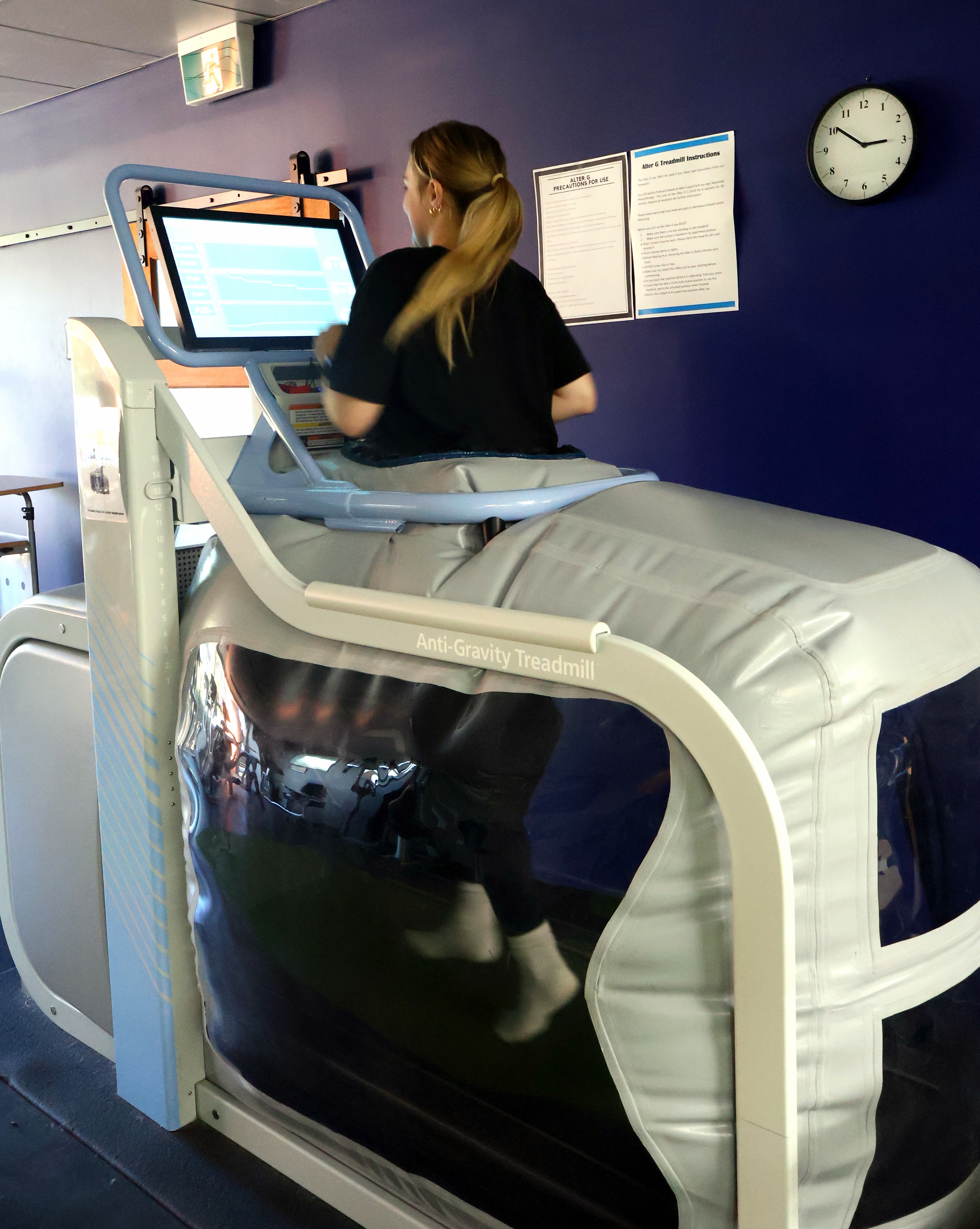
Running gait can be changed, but it should be changed for a reason. A 2024 randomized trial in runners with patellofemoral pain found that two short gait-retraining programmes, one targeting impact and one increasing cadence, improved running pain at six months compared with no intervention. That does not mean every injured runner needs a higher cadence. Treadmill video, cadence measures and, where available, force or pressure data are most useful when they test a specific hypothesis and when the change is reassessed. Reviews are also essential as distance and speed return. The target is not a perfect running style. It is a runner whose symptoms, strength and training tolerance are keeping pace with the programme.
Selected research
1. Frandsen JSB, Hulme A, Parner ET, et al. How much running is too much? Identifying high-risk running sessions in a 5200-person cohort study. British Journal of Sports Medicine. 2025;59:1203-1210. doi:10.1136/bjsports-2024-109380.
2. de Souza Junior JR, Rabelo PHR, Lemos TV, et al. Effects of two gait retraining programs on pain, function, and lower limb kinematics in run
Not sure if Physiotherapy is the best option or want some quick advice?
Email our team and a Physiotherapist will contact you within 1 working day
